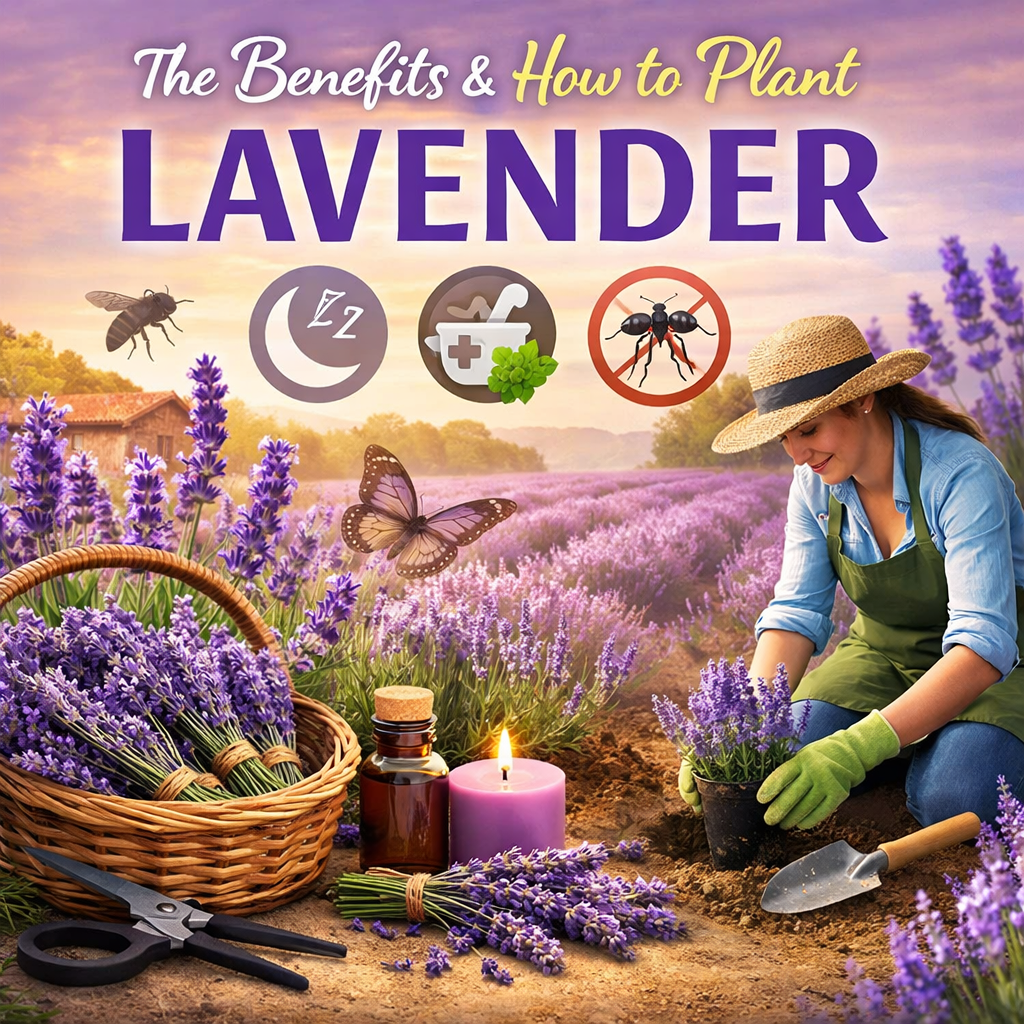
Lavender (Lavandula) is one of the most beloved and widely grown aromatic plants in the world. Known for its soothing fragrance, beautiful purple flowers, and multiple practical uses, lavender has been cultivated for thousands of years in gardens, farms, and homes. Beyond its visual appeal, lavender offers remarkable benefits for health, home environments, and even agriculture. This article explores the many advantages of lavender and provides a detailed, step-by-step guide on how to plant and care for it successfully.
Advantages of Lavender
1. Natural Stress and Anxiety Relief
One of the most famous benefits of lavender is its calming effect. The scent of lavender essential oil has been scientifically shown to reduce stress, anxiety, and nervous tension. Many people use lavender in aromatherapy, sleep pillows, candles, or diffusers to promote relaxation and improve sleep quality. Simply growing lavender at home allows you to enjoy its natural fragrance daily, creating a peaceful environment without artificial chemicals.
2. Improves Sleep Quality
Lavender is widely known as a natural sleep aid. Its aroma helps slow heart rate and relax the nervous system, making it easier to fall asleep and stay asleep. Placing dried lavender flowers near the bed or growing lavender near bedroom windows can gently release its scent at night, supporting deeper and more restful sleep.
3. Medicinal and Healing Properties
Lavender has antibacterial, antifungal, and anti-inflammatory properties. Traditionally, it has been used to treat minor burns, insect bites, headaches, and skin irritations. Lavender oil can help disinfect wounds and speed up healing. While it should not replace medical treatment, lavender remains a valuable natural remedy when used properly.
4. Repels Insects Naturally
Lavender acts as a natural insect repellent. Mosquitoes, flies, moths, and ants dislike its strong scent. Planting lavender around windows, doorways, gardens, or patios can help reduce insect presence without harmful pesticides. Dried lavender sachets are also commonly used in closets to protect clothes from moths.
5. Enhances Garden Biodiversity
Lavender attracts beneficial pollinators such as bees, butterflies, and other insects essential for healthy ecosystems. By planting lavender, gardeners help support pollination, which benefits nearby vegetables, fruits, and flowers. This makes lavender an excellent companion plant in organic gardens.
6. Culinary and Household Uses
Lavender is not only ornamental but also edible. Culinary lavender is used in teas, desserts, honey, syrups, and baked goods. In small amounts, it adds a unique floral flavor. Additionally, lavender is commonly used in homemade soaps, cosmetics, cleaning products, and potpourri, making it a versatile plant for daily life.
7. Long-Lasting and Low Maintenance
Once established, lavender is a hardy, drought-tolerant plant that requires minimal care. It thrives in poor soil conditions where many other plants struggle. Lavender plants can live for many years, providing long-term beauty and fragrance with little effort.
Types of Lavender
Before planting, it is important to choose the right type of lavender:
- English Lavender (Lavandula angustifolia) – Best for fragrance and cold climates.
- French Lavender (Lavandula dentata) – Recognizable by its toothed leaves; prefers warmer climates.
- Spanish Lavender (Lavandula stoechas) – Known for its distinctive flower “ears”; heat tolerant.
- Hybrid Lavender (Lavandula x intermedia) – Larger plants, ideal for oil production.
How to Plant Lavender: Step-by-Step Guide
1. Choosing the Right Location
Lavender thrives in full sunlight. Choose a location that receives at least 6–8 hours of direct sunlight per day. Lavender does not tolerate shade or overly humid conditions. Good air circulation is essential to prevent fungal diseases.
2. Soil Preparation
Lavender prefers well-drained, sandy or loamy soil with a slightly alkaline pH (around 6.5–7.5). Avoid heavy clay soil, as it retains too much moisture and can cause root rot.
To prepare the soil:
- Mix sand or gravel into dense soil to improve drainage.
- Avoid rich organic compost; lavender grows best in poor to moderately fertile soil.
- Raised beds or mounds work well in areas with heavy rainfall.
3. Planting Lavender from Seeds or Seedlings
Planting from Seed:
- Start seeds indoors 8–10 weeks before the last frost.
- Lightly press seeds into the soil; do not cover them completely, as they need light to germinate.
- Keep soil slightly moist until germination, which may take 2–4 weeks.
Planting Seedlings:
- Dig a hole slightly larger than the root ball.
- Place the plant so the crown sits just above soil level.
- Space plants 30–60 cm (12–24 inches) apart, depending on variety.
- Gently firm the soil around the roots.
4. Watering
Water lavender lightly but deeply after planting. Once established, lavender requires very little water. Overwatering is one of the most common mistakes. Allow the soil to dry completely between watering. In rainy climates, natural rainfall may be sufficient.
5. Mulching
Avoid moisture-retaining mulches such as bark or compost. Instead, use gravel, stones, or sand around the base of the plant. This helps reflect sunlight, improve drainage, and prevent root rot.
6. Pruning and Maintenance
Pruning is essential to keep lavender healthy and compact:
- Lightly prune after flowering to encourage new growth.
- Perform a more thorough prune in early spring or after flowering season.
- Never cut into old woody stems, as they may not regrow.
Regular pruning extends the life of the plant and promotes more blooms.
7. Harvesting Lavender
Harvest lavender when about half of the flower buds have opened. Cut stems in the morning after dew has dried. Bundle stems together and hang them upside down in a dry, dark, well-ventilated area for drying.
Conclusion
Lavender is a remarkable plant that offers beauty, fragrance, health benefits, and practical uses all in one. Its calming aroma promotes relaxation and better sleep, while its natural properties support healing, repel insects, and enhance biodiversity. Best of all, lavender is easy to grow and maintain, making it an excellent choice for beginners and experienced gardeners alike.
By providing the right sunlight, well-drained soil, and minimal watering, you can enjoy a thriving lavender plant for many years. Whether planted in a garden, pot, or balcony, lavender adds elegance, tranquility, and value to any living space. 🌿💜