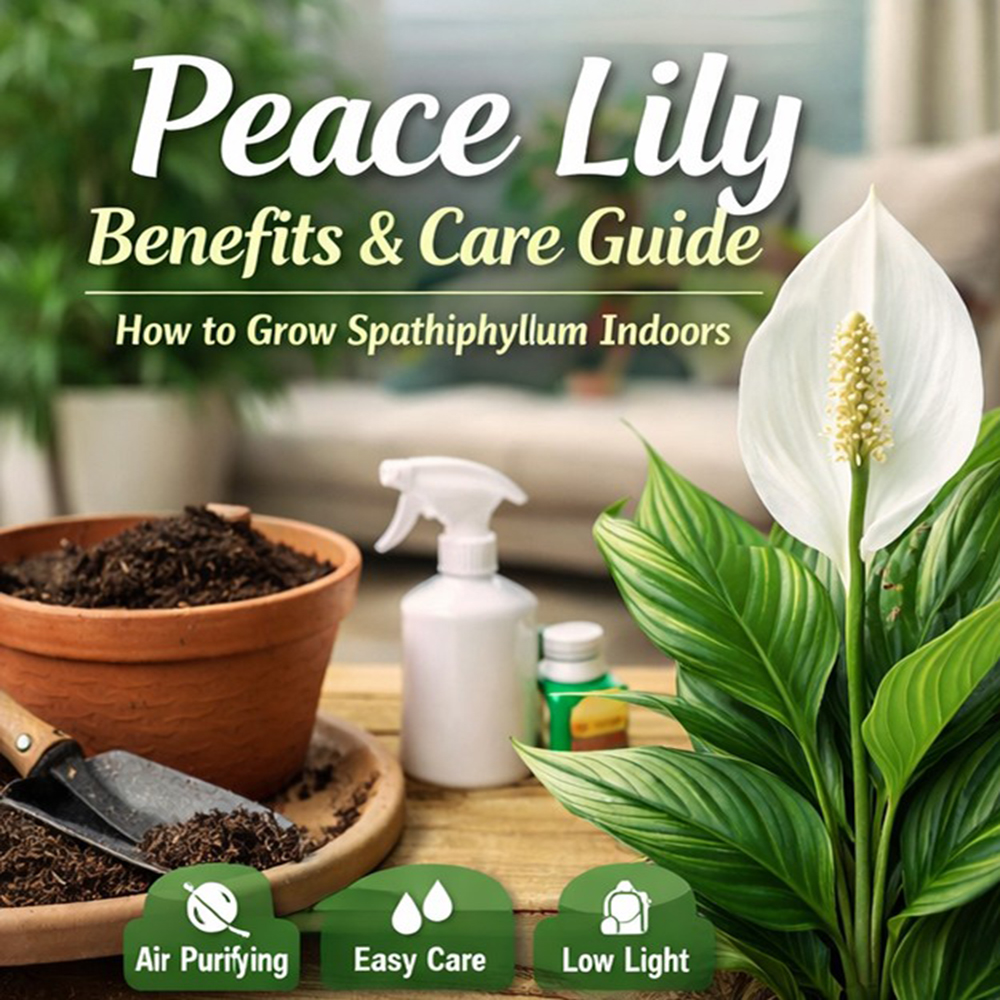
The Peace Lily (Spathiphyllum) is one of the most beloved indoor plants worldwide, known for its elegant white blooms, glossy green leaves, and impressive adaptability to indoor environments. Native to the tropical rainforests of Central and South America, this plant has earned a reputation as both a decorative and functional houseplant.
Beyond its beauty, the Peace Lily provides numerous health, environmental, and emotional benefits. This article explores the key advantages of the Peace Lily and offers a detailed guide on how to plant and care for it properly.
🌿 Advantages of Peace Lily (Spathiphyllum)
1. Powerful Natural Air Purifier
Peace Lilies are renowned for their air-purifying abilities. They help remove common indoor toxins such as formaldehyde, benzene, ammonia, carbon monoxide, and trichloroethylene. These pollutants often originate from furniture, cleaning products, paints, and electronics. By absorbing harmful substances through their leaves and roots, Peace Lilies contribute to cleaner and healthier indoor air.
2. Improves Indoor Humidity
Through transpiration, Peace Lilies release moisture into the air, helping to raise humidity levels. This is particularly beneficial in air-conditioned rooms or dry climates. Improved humidity can reduce dry skin, ease breathing, soothe irritated eyes, and minimize sinus discomfort.
3. Low-Maintenance and Beginner-Friendly
Peace Lilies are ideal for beginners because they are forgiving and easy to care for. They clearly signal when they need water by drooping their leaves and quickly recover after watering. They do not require frequent pruning or constant attention, making them perfect for busy households and offices.
4. Thrives in Low Light Conditions
Unlike many flowering plants, Peace Lilies can thrive in low to medium indirect light. They grow well in bedrooms, offices, hallways, and apartments with limited sunlight. While brighter indirect light encourages more blooms, the plant remains healthy even in low-light environments.
5. Elegant Decorative and Emotional Value
With its graceful white spathes and lush green foliage, the Peace Lily adds a calming, minimalist beauty to any space. It is often associated with peace, purity, and harmony, making it a popular plant for homes, hotels, offices, and even ceremonial settings.
🌱 How to Plant Peace Lily (Step-by-Step)
Step 1: Choose the Right Pot
Select a pot that is slightly larger than the root ball and has drainage holes. Proper drainage is essential to prevent root rot.
Step 2: Prepare the Soil
Use a well-draining, nutrient-rich potting mix:
-
Indoor potting soil
-
Peat moss or coco peat
-
Perlite or coarse sand
Avoid heavy garden soil, which can compact easily.
Step 3: Planting Process
-
Add soil to the bottom of the pot
-
Place the Peace Lily in the center
-
Fill around the roots gently
-
Keep the plant at the same depth
-
Water thoroughly and allow excess water to drain
Place the pot in indirect light after planting.
🌼 Peace Lily Care Guide
Watering
-
Water when the top 2–3 cm of soil is dry
-
Use room-temperature water
-
Do not let the plant sit in standing water
Light
-
Best: Bright, indirect light
-
Tolerates: Low light
-
Avoid: Direct sunlight
Temperature & Humidity
-
Ideal: 18–27°C (65–80°F)
-
Likes high humidity
-
Mist occasionally or use a humidifier
Fertilizing
Feed every 6–8 weeks during spring and summer using a balanced liquid fertilizer.
Repotting
Repot every 1–2 years or when roots become crowded.
🌸 Common Problems & Solutions
| Problem | Cause | Solution |
|---|---|---|
| Yellow leaves | Overwatering | Improve drainage |
| Brown tips | Low humidity | Increase moisture |
| No flowers | Low light | Move to brighter spot |
🌿 Conclusion
The Peace Lily is a perfect combination of beauty, simplicity, and function. Its ability to purify air, improve humidity, and thrive indoors with minimal care makes it one of the best houseplants available. With proper planting and basic care, this elegant plant can enhance your living or working space for many years.