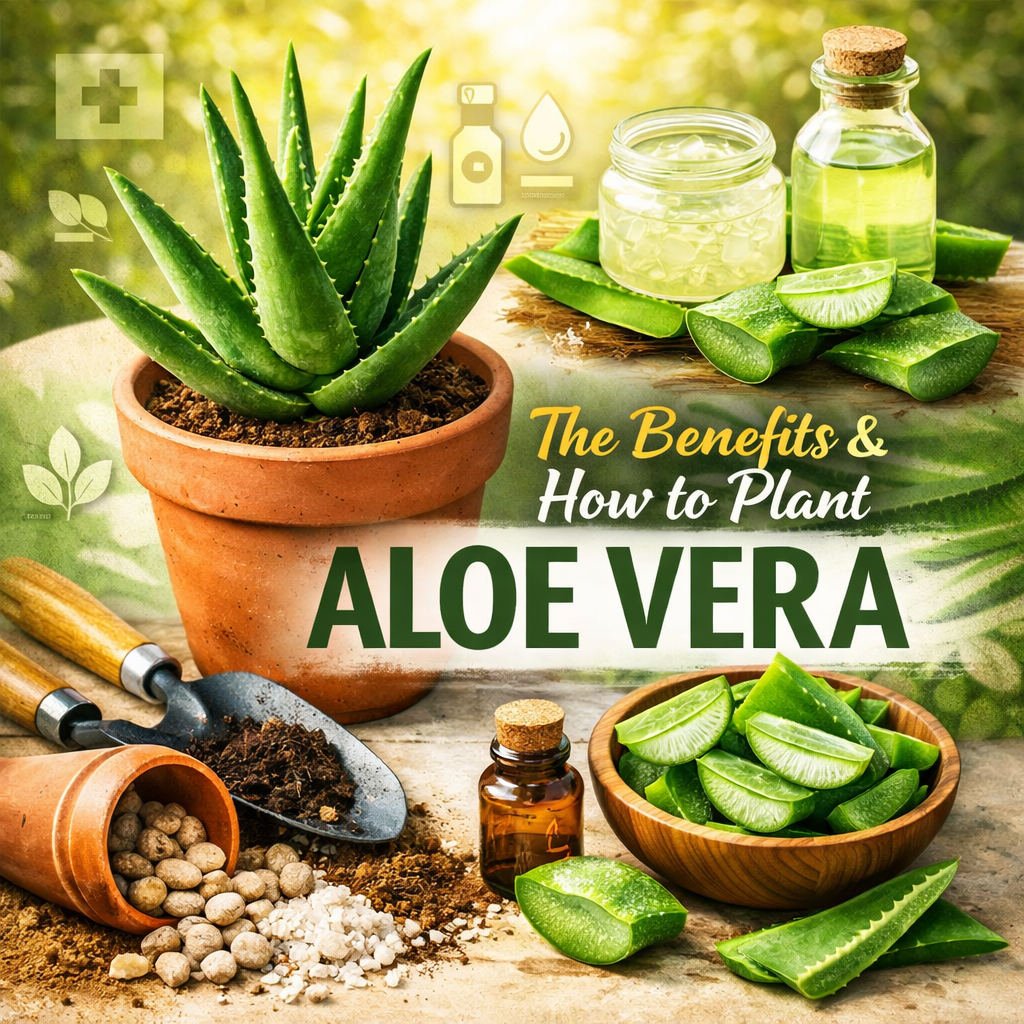
Aloe vera (Aloe barbadensis miller) is one of the most popular and widely used medicinal plants in the world. Known for its thick, fleshy leaves filled with soothing gel, aloe vera has been cultivated for thousands of years for health, beauty, and household purposes. Beyond its well-known skin benefits, aloe vera is also an easy-to-grow plant that thrives indoors and outdoors with minimal care. This article explores the many advantages of aloe vera and provides a detailed, practical guide on how to plant and care for it successfully.
Advantages of Aloe Vera
1. Medicinal and Health Benefits
One of the greatest advantages of aloe vera is its medicinal value. The clear gel inside its leaves contains vitamins (A, C, E, and B12), minerals, enzymes, amino acids, and antioxidants.
- Skin healing: Aloe vera gel is famous for soothing burns, cuts, sunburns, and insect bites. It helps reduce inflammation, promotes faster wound healing, and keeps the skin moisturized.
- Digestive support: Aloe vera juice, when properly prepared and consumed in moderation, may help digestion, relieve constipation, and support gut health.
- Anti-inflammatory properties: Aloe vera contains compounds that can reduce inflammation, making it useful for joint pain and minor muscle aches.
- Immune system support: The antioxidants in aloe vera help fight free radicals, supporting overall health.
2. Beauty and Skincare Uses
Aloe vera is a common ingredient in cosmetics and personal care products due to its gentle and effective nature.
- Natural moisturizer: Aloe vera hydrates the skin without leaving a greasy feel, making it suitable for all skin types.
- Hair care: Aloe vera helps reduce dandruff, nourishes the scalp, and promotes healthy hair growth.
- Anti-aging effects: Regular use may reduce fine lines and improve skin elasticity due to its collagen-boosting properties.
3. Air-Purifying Qualities
Aloe vera is also known as a beneficial houseplant that helps improve indoor air quality. It can absorb certain toxins from the air and releases oxygen, especially at night, making it a good plant for bedrooms and living spaces.
4. Easy to Grow and Low Maintenance
Another major advantage of aloe vera is how easy it is to grow. It is a hardy succulent that requires minimal watering and care. Even beginner gardeners can successfully grow aloe vera with little effort.
5. Cost-Effective and Sustainable
Having an aloe vera plant at home means you always have access to fresh gel for minor burns, skincare, or hair care. This reduces the need to buy commercial products and supports a more natural, sustainable lifestyle.
How to Plant Aloe Vera: A Detailed Guide
1. Choosing the Right Aloe Vera Plant
You can start aloe vera in two main ways:
- From a young plant (pup): This is the easiest and most reliable method. Aloe vera produces small offshoots called “pups” that grow around the base of the parent plant.
- From seeds: This method takes longer and requires more patience, but it is possible.
For beginners, planting a pup is highly recommended.
2. Selecting the Right Pot and Location
Pot selection:
- Choose a pot with drainage holes at the bottom. Aloe vera roots do not tolerate standing water.
- Clay or terracotta pots are ideal because they allow excess moisture to evaporate.
- The pot should be slightly larger than the root system, not too big.
Location:
- Aloe vera loves bright, indirect sunlight.
- Place it near a sunny window if grown indoors.
- Outdoors, choose a spot with partial to full sunlight, depending on climate.
- Avoid extreme cold; aloe vera thrives in warm temperatures between 18–30°C (65–86°F).
3. Preparing the Soil
Soil quality is crucial for aloe vera growth.
- Use well-draining soil, such as cactus or succulent potting mix.
- You can make your own mix by combining:
- 2 parts regular potting soil
- 1 part sand or perlite
- 1 part compost (optional)
Good drainage prevents root rot, one of the most common problems with aloe vera.
4. Planting Aloe Vera Step by Step
Planting a pup:
- Gently remove the pup from the parent plant, making sure it has some roots.
- Let the pup dry for one to two days. This helps prevent rot.
- Fill the pot halfway with prepared soil.
- Place the pup in the center and spread the roots carefully.
- Add soil around the plant until the roots are fully covered.
- Do not water immediately. Wait 2–3 days before the first watering.
Planting from seeds:
- Fill a shallow container with well-draining soil.
- Place seeds on the soil surface and lightly cover them.
- Keep the soil slightly moist, not wet.
- Place the container in a warm, bright location.
- Germination may take several weeks.
5. Watering Requirements
Aloe vera is a drought-tolerant plant.
- Water deeply but infrequently.
- Allow the soil to dry out completely between watering.
- Overwatering can cause root rot and leaf damage.
- In summer, watering once every 2–3 weeks is usually enough.
- In winter, reduce watering to once a month or less.
Always check the soil moisture before watering.
6. Light and Temperature Needs
- Aloe vera needs bright light to grow well.
- Too little light causes weak, stretched leaves.
- Too much direct sunlight may cause leaf discoloration.
- Protect the plant from frost and freezing temperatures.
7. Fertilizing Aloe Vera
Aloe vera does not require frequent fertilizing.
- Feed once or twice a year, preferably in spring or summer.
- Use a diluted cactus or succulent fertilizer.
- Avoid over-fertilizing, which can damage the plant.
8. Common Problems and Solutions
- Yellow or mushy leaves: Usually caused by overwatering.
- Brown leaf tips: May indicate too much direct sunlight or lack of water.
- Slow growth: Could be due to poor light or nutrient deficiency.
Regular observation helps keep the plant healthy.
Conclusion
Aloe vera is a remarkable plant with numerous advantages, ranging from medicinal and cosmetic benefits to air purification and ease of care. Its ability to thrive with minimal attention makes it ideal for homes, offices, and gardens. By providing the right soil, light, and watering routine, anyone can successfully grow aloe vera and enjoy its many benefits. Whether used for skincare, health remedies, or as a decorative houseplant, aloe vera truly deserves its reputation as a “plant of immortality.”